Slope engineering in Clarington encompasses the comprehensive assessment, design, and stabilization of natural and constructed embankments to protect property, infrastructure, and public safety. The municipality's rolling topography, carved by glacial activity and traversed by numerous creeks and ravines feeding into Lake Ontario, creates inherent slope hazards that demand specialized geotechnical attention. From the steep valleys along Bowmanville and Soper Creeks to the engineered embankments supporting new residential subdivisions, understanding slope behavior is critical for sustainable development.
Professionals in this field provide essential services including detailed slope stability analysis to quantify factor of safety under various conditions, design of active and passive anchor systems for deep-seated stabilization, and engineered retaining wall solutions that manage grade changes while resisting lateral earth pressures. These services work in concert to address both immediate risks and long-term performance requirements.
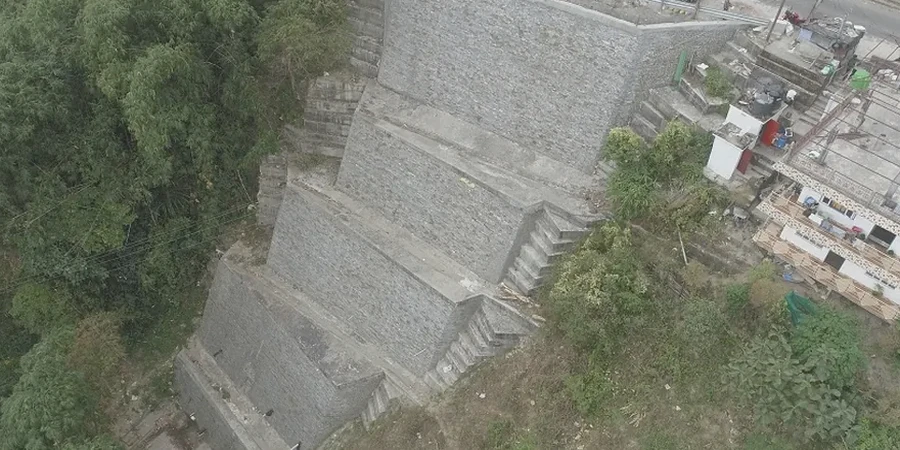
The local geology presents unique challenges, dominated by glacial till deposits overlying the Ordovician-age Lindsay Formation shale and limestone bedrock. The overburden typically consists of a complex interlayering of silty clay till, sand lenses, and glaciofluvial deposits that can create perched water tables and preferential seepage paths. These hydrogeological conditions are primary triggers for slope instability in the region, particularly during spring thaw and heavy precipitation events when pore water pressures increase dramatically.
Regulatory compliance in Clarington falls under the Ontario Building Code (OBC) and the Conservation Authorities Act, with the Central Lake Ontario Conservation Authority (CLOCA) playing a pivotal regulatory role. Any development or site alteration within regulated hazard lands, including valley slopes and erosion-prone areas, requires a geotechnical slope stability assessment prepared and stamped by a licensed Professional Engineer. These assessments must demonstrate long-term stability factors meeting or exceeding the minimums prescribed in the OBC and CLOCA's technical guidelines, often requiring a minimum factor of safety of 1.5 for permanent slopes under static conditions.
Common questions
What are the typical signs of slope instability I should watch for on my property in Clarington?
Common indicators include tension cracks in the ground surface parallel to the slope crest, leaning or tilting trees, seepage or saturated zones on the slope face, bulging at the toe, and cracking or displacement of retaining walls. Inside your home, sticking doors or windows and new drywall cracks can signal slope movement affecting foundations. Prompt professional evaluation is essential.
What role does the Central Lake Ontario Conservation Authority (CLOCA) play in slope projects?
CLOCA regulates development within hazard lands including valley slopes, wetlands, and watercourses under the Conservation Authorities Act. They require geotechnical slope stability assessments demonstrating acceptable safety factors before issuing permits. Their review ensures proposed works do not increase erosion, destabilize neighboring properties, or negatively impact natural heritage features and flood conveyance capacity.
How do local soil and groundwater conditions affect slope stability in Clarington?
The prevalent glacial till and interbedded sand deposits create complex groundwater regimes where perched water tables can develop unexpectedly. Saturated sandy layers reduce effective stress and shear strength along potential failure surfaces. Additionally, the underlying shale bedrock can act as a low-permeability boundary, concentrating seepage and increasing pore pressures at the soil-rock interface during wet seasons.
What is the difference between active and passive slope stabilization approaches?
Active stabilization directly reduces driving forces, such as installing tieback anchors that apply tension to restrain the slope mass or regrading to reduce slope angle. Passive methods increase resisting forces, including constructing retaining walls or installing soil nails that reinforce the ground internally. Most complex slope remediation projects in Clarington employ a combination of both approaches tailored to site-specific conditions.