Geotechnical laboratory testing forms the backbone of every reliable construction and infrastructure project in Clarington, Ontario. This category encompasses the full suite of analytical procedures used to determine the physical, mechanical, and chemical properties of soil and rock samples recovered from site investigations. Without accurate laboratory data, engineers cannot design safe foundations, assess slope stability, or predict settlement behaviour with confidence. In Clarington’s rapidly developing landscape—where residential subdivisions, commercial plazas, and municipal infrastructure are continuously expanding—laboratory testing ensures that ground conditions are thoroughly understood before a single shovel breaks ground. The laboratory acts as the bridge between field exploration and engineering design, transforming raw samples into actionable geotechnical parameters.
Clarington’s geology presents unique challenges that make laboratory testing particularly critical. The municipality sits atop a complex stratigraphy of glacial tills, glaciolacustrine clays, and near-surface shale bedrock belonging to the Georgian Bay Formation. The northern reaches of Clarington, including areas like Enniskillen and Hampton, are underlain by dense till deposits that can vary dramatically in grain size and consistency over short distances. Meanwhile, the southern portions near Lake Ontario—including Bowmanville and Newcastle—feature thick sequences of sensitive, low-plasticity silty clays that are prone to disturbance and can lose significant strength when remoulded. These conditions demand precise laboratory characterization to identify potential problems such as shrink-swell behaviour, quick clay sensitivity, or variable bearing capacity. A standard grain size analysis (sieve + hydrometer) is often the first step in classifying these soils, but the full laboratory category extends far beyond this fundamental test.
All geotechnical laboratory work in Clarington must comply with applicable Canadian and Ontario standards. The primary framework is CSA A23.1/A23.2 for concrete and aggregate testing, alongside ASTM International standards such as ASTM D422 for particle-size analysis, ASTM D4318 for Atterberg limits, and ASTM D2435 for consolidation testing. Ontario’s Ministry of Transportation (MTO) also mandates Laboratory Testing Manual LS-600 series methods for provincial infrastructure projects, including highways and bridges within the Regional Municipality of Durham. Environmental testing for contaminated sites follows the protocols established by the Ontario Regulation 153/04 under the Environmental Protection Act, requiring specific analytical procedures for soil and groundwater. Laboratories operating in Clarington typically maintain accreditation through the Canadian Association for Laboratory Accreditation (CALA) or similar bodies, ensuring that results are defensible and meet the rigorous quality assurance standards demanded by municipal building officials and provincial regulators.
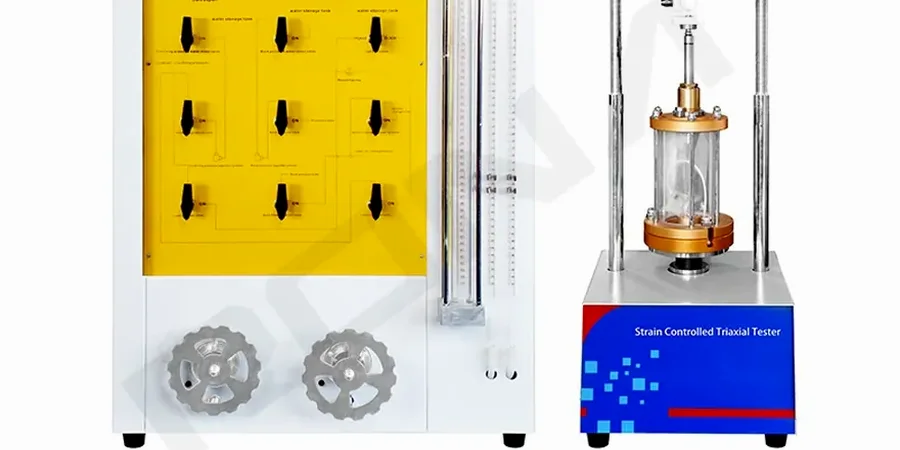
The types of projects that rely on comprehensive laboratory testing in Clarington are diverse and ever-present. Large-scale residential developments in Courtice and Bowmanville require detailed consolidation and shear strength testing to design foundations on the compressible glaciolacustrine clays. Infrastructure projects such as the ongoing Highway 418 extension and the Darlington Nuclear Generating Station refurbishment depend on advanced triaxial and permeability testing to ensure long-term performance and safety. Municipal works, including stormwater management ponds, sanitary sewers, and road widenings, need compaction and Proctor density testing to verify that backfill materials meet specified engineering properties. Even smaller-scale projects like custom homes on rural lots or additions to existing structures benefit from basic index testing to confirm soil suitability and identify any unforeseen ground hazards. In every case, the laboratory provides the quantitative data that transforms geological uncertainty into engineered certainty.
Available services
Common questions
Why is geotechnical laboratory testing necessary before construction in Clarington?
Laboratory testing provides essential data on soil strength, compressibility, and permeability that cannot be reliably estimated from field observations alone. In Clarington, where sensitive clays and variable glacial deposits are common, this data prevents foundation failures, excessive settlement, and drainage problems. Engineers use these results to design safe structures tailored to actual ground conditions, meeting Ontario Building Code requirements and protecting long-term investments.
What Canadian standards govern geotechnical laboratory testing in Ontario?
Geotechnical laboratories in Ontario follow ASTM International standards for most soil and rock tests, including ASTM D422 for particle-size analysis and ASTM D4318 for Atterberg limits. MTO’s LS-600 series methods apply to provincial transportation projects. Concrete and aggregate testing must meet CSA A23.1/A23.2, while environmental testing for contaminated sites follows Ontario Regulation 153/04 protocols under the Environmental Protection Act.
How do local soil conditions in Clarington affect laboratory testing requirements?
Clarington’s glaciolacustrine clays near Lake Ontario can be highly sensitive and lose strength when disturbed, requiring careful sample handling and specialized consolidation or triaxial tests. The glacial till deposits in northern areas vary widely in grain size and density, often demanding comprehensive classification suites. These local conditions mean generic testing programs are rarely adequate—tests must be selected based on the specific geological unit encountered at each site.
How long does a typical geotechnical laboratory testing program take to complete?
Turnaround times depend on the test types and project complexity. Basic index tests like moisture content and grain size analysis may be completed within three to five business days. Consolidation tests require a week or more due to incremental loading stages, while triaxial shear and permeability tests can extend timelines further. Rush processing is often available for time-sensitive projects, but standard programs should allow two to four weeks for full reporting.